


Building for Growth: HCB Australia appoints Industry Leader as Chairperson
| HCB Chief Medical Officer
| July 7th, 2026
📢 𝗛𝗖𝗕 𝗚𝗿𝗼𝘂𝗽 𝗶𝘀 𝘀𝘁𝗿𝗲𝗻𝗴𝘁𝗵𝗲𝗻𝗶𝗻𝗴 𝗶𝘁𝘀 𝗔𝘂𝘀𝘁𝗿𝗮𝗹𝗶𝗮𝗻 𝗕𝗼𝗮𝗿𝗱!
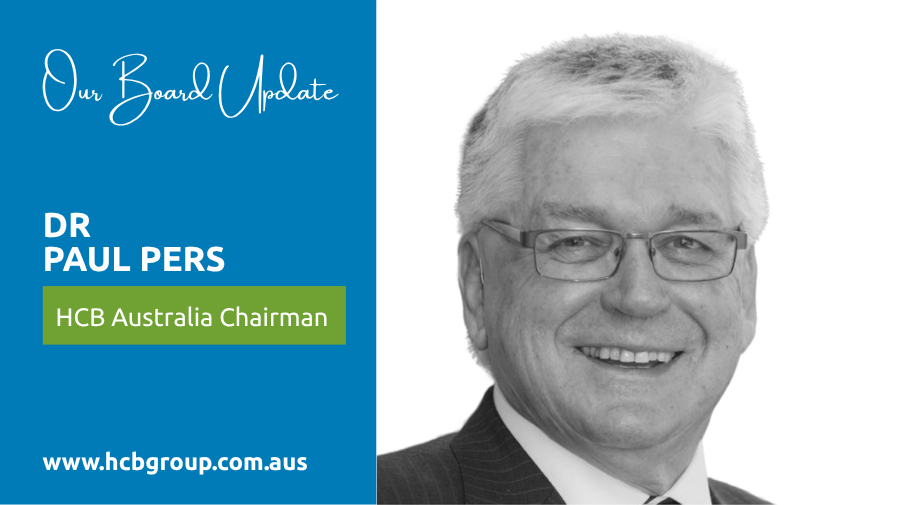
We’re delighted to announce that Dr Paul Pers has been appointed Chairman of HCB Australia.
Already serving as a Board Member and our Australian Chief Medical Officer, Dr Pers brings extensive experience as an Occupational Health Physician, leadership and a shared commitment to HCB Group’s approach to early intervention. Dr Pers is well known and respected in the Australian Life Insurance market.
We will continue to grow our presence in Australia and are delighted with the traction that our service is beginning to achieve. Watch this space for more announcements soon.
Following his appointment Dr Paul Pers shares his thoughts:
I am honoured to be appointed Chairperson of HCB Australia after a decade of collaboration between MomentaHQ Australia and HCB Group UK. HCB has over 40 years of experience delivering early, results-focused interventions for employees and insurers before and after periods of absence. Our approach is constructive and builds strong rapport with both employees and employers, and it is grounded in evidence-informed social science. HCB also helps employees navigate the complex process of accessing and using value-based healthcare.
Over the past 15 years, there has been a large increase in well-publicised cases of mental-health-related employee absence and illness, more often that not, driven by life events. This change means we need proactive approaches that move beyond older, purely medical assumptions.
Mental health and mental illness are shaped not only by biology but also by social factors. Ideas about well-being and mental illness are socially constructed—society’s definitions influence how people think about, respond to and treat behaviours and characteristics labelled as mental illness.
Although the social construction of mental illness has been recognized for decades, traditional rehabilitation practices have often continued to focus on biological explanations for both physical and mental health problems. The biopsychosocial model has been discussed widely, but in practice the (biological) aspect has dominated in recent years resulting in the unnecessary auto deployment of the medical model.
A better path is to shift toward approaches that start from social and psychological factors—what we can call “sociopsychobio”—rather than focusing first on clinical symptoms. Social-first approaches are especially useful for preventing absences and supporting early return to work.
Key to these approaches are positive and earlier workplace interventions and empowered communication.
These help employees express agency—their ability to make choices and influence their own lives—while acknowledging the social pressures, predicaments and responsibilities they face. When employees are seen in the context of what they do and the social roles they care about, they are better able to accept and value themselves for their contributions, instead of becoming frustrated by what they cannot do.
References:
Eisenberg L. The Social Construction of Mental Illness. Psychological Medicine 1988;18:1–9
Waddell G, Aylward M. Models of Sickness and Disability: Applied to Common Health Problems. Royal Society of Medicine Press 2010
Haslam C, Jetten J, Cruwys T, Dingle G, Haslam SA. The New Psychology of Health: Unlocking the Social Cure. Routledge 2018
Guppy M, Tracy M, Buchbinder R. Overdiagnosis and Overtesting. Aus J General Practice 2026